Oligosoma aff. newmani "St Arnaud"
St Arnaud speckled skink
Oligosoma aff. newmani "St Arnaud"
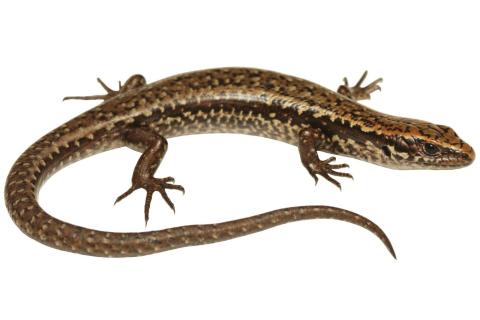
Length: SVL up to 98mm, with the tail being equal to or slightly longer than the body length
Weight: Unknown
Description
A rare and beautifully patterned species from the Nelson Lakes area of the South Island. This species was only recently recognised through advanced genomic work (Ludovic Dutoit, unpublished data), and was previously considered a unique population of a more widespread species. They were formerly abundant at sites near St Arnaud, but have experienced severe declines due to habitat loss and predators. They are now one of our rarest species.
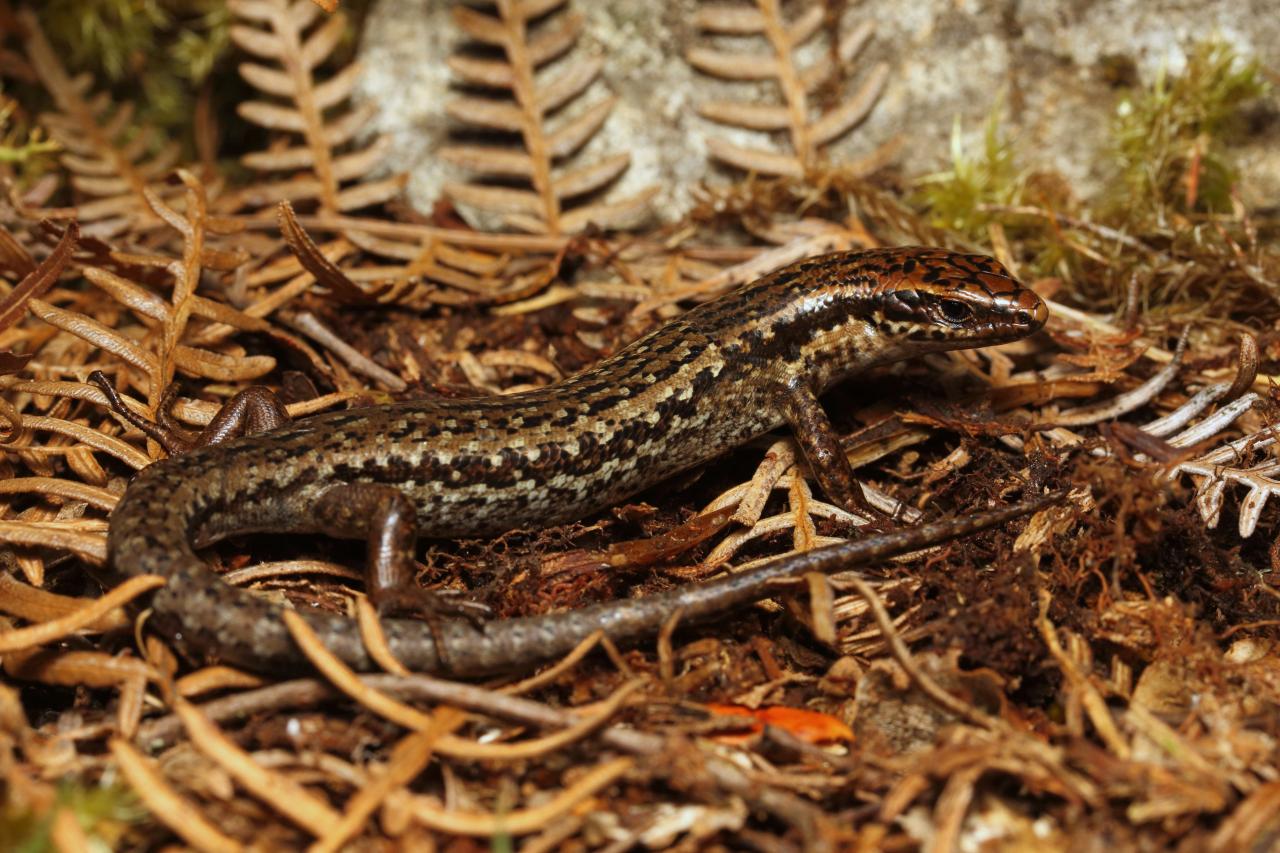
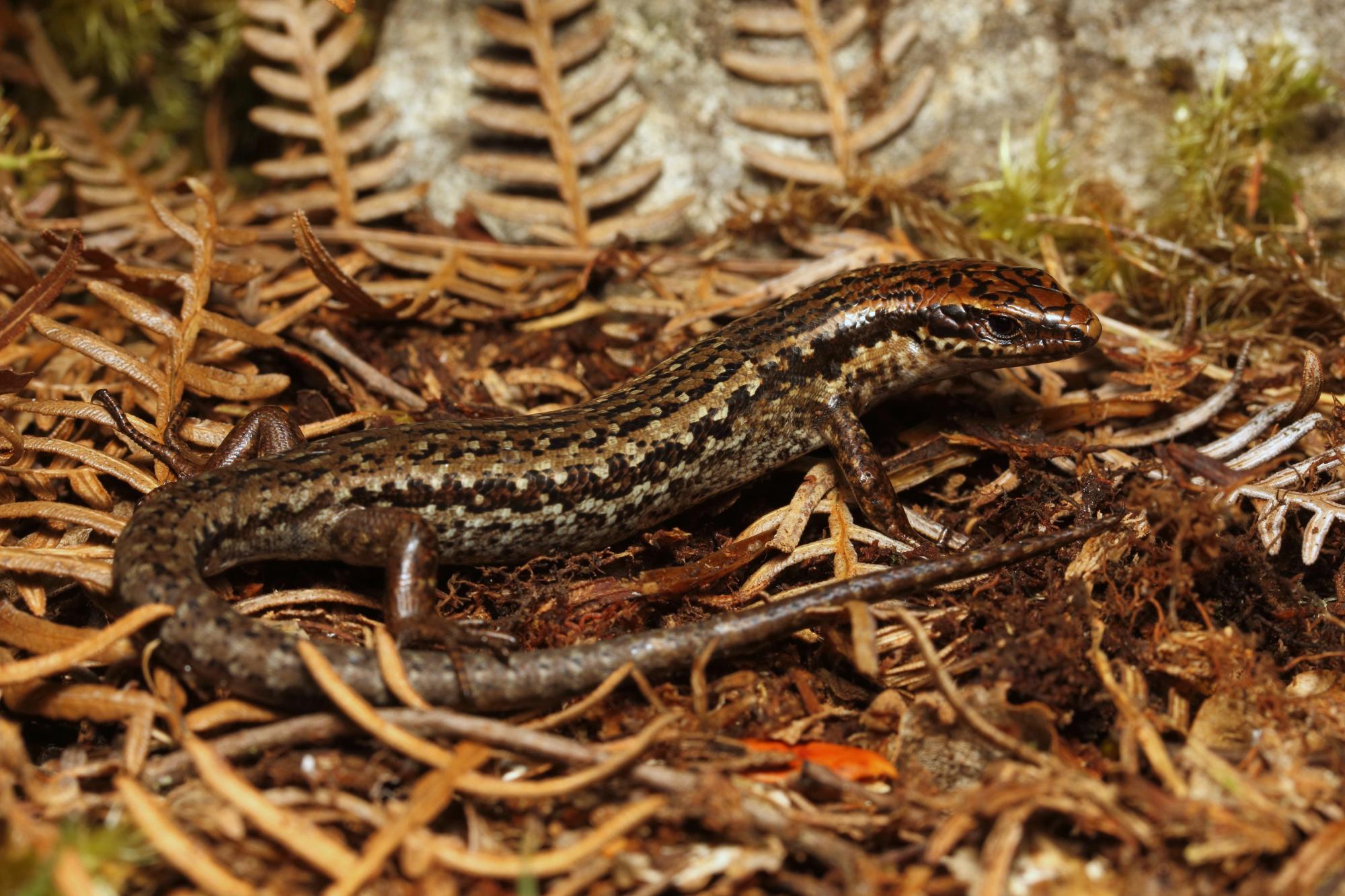
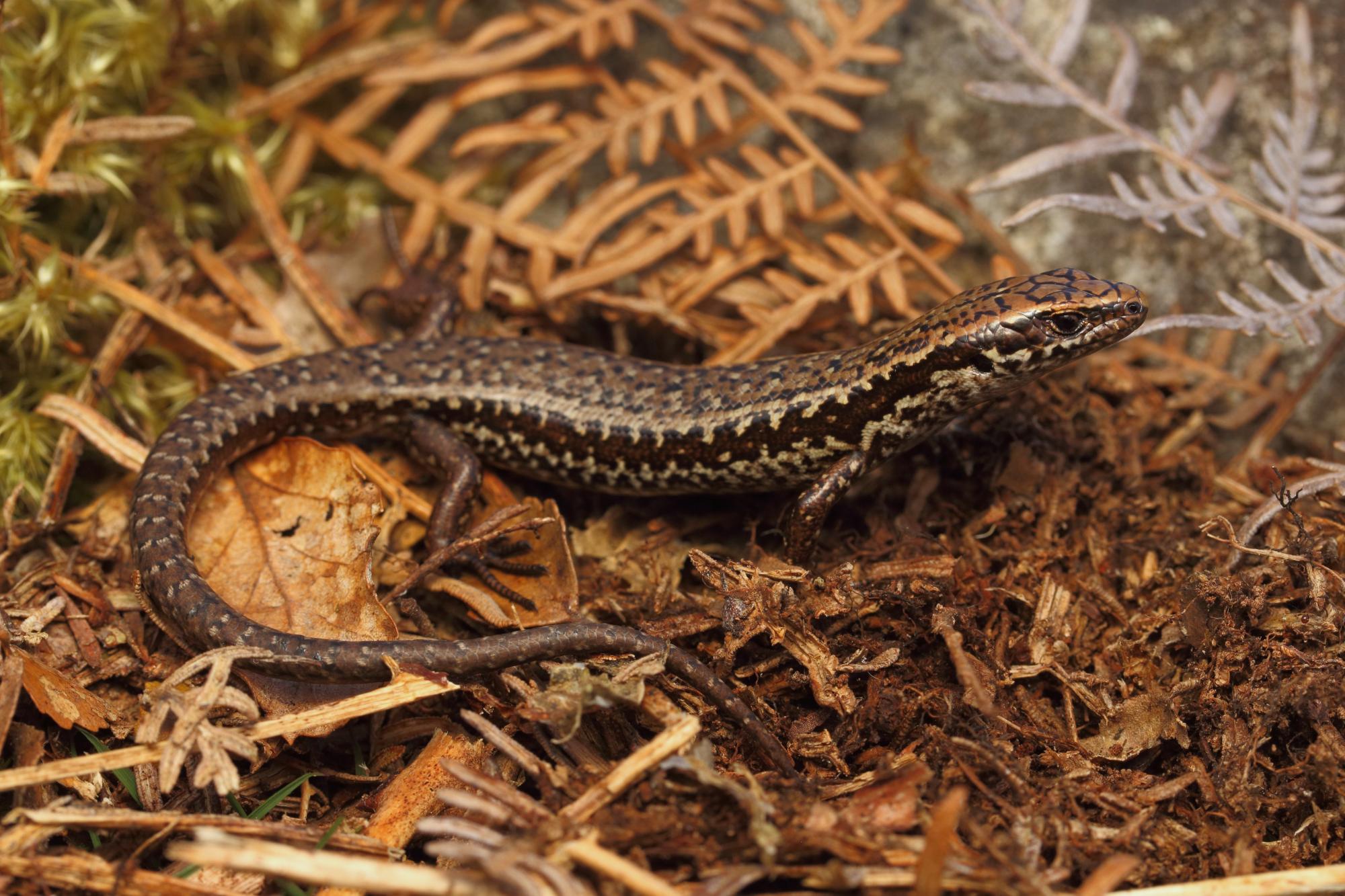
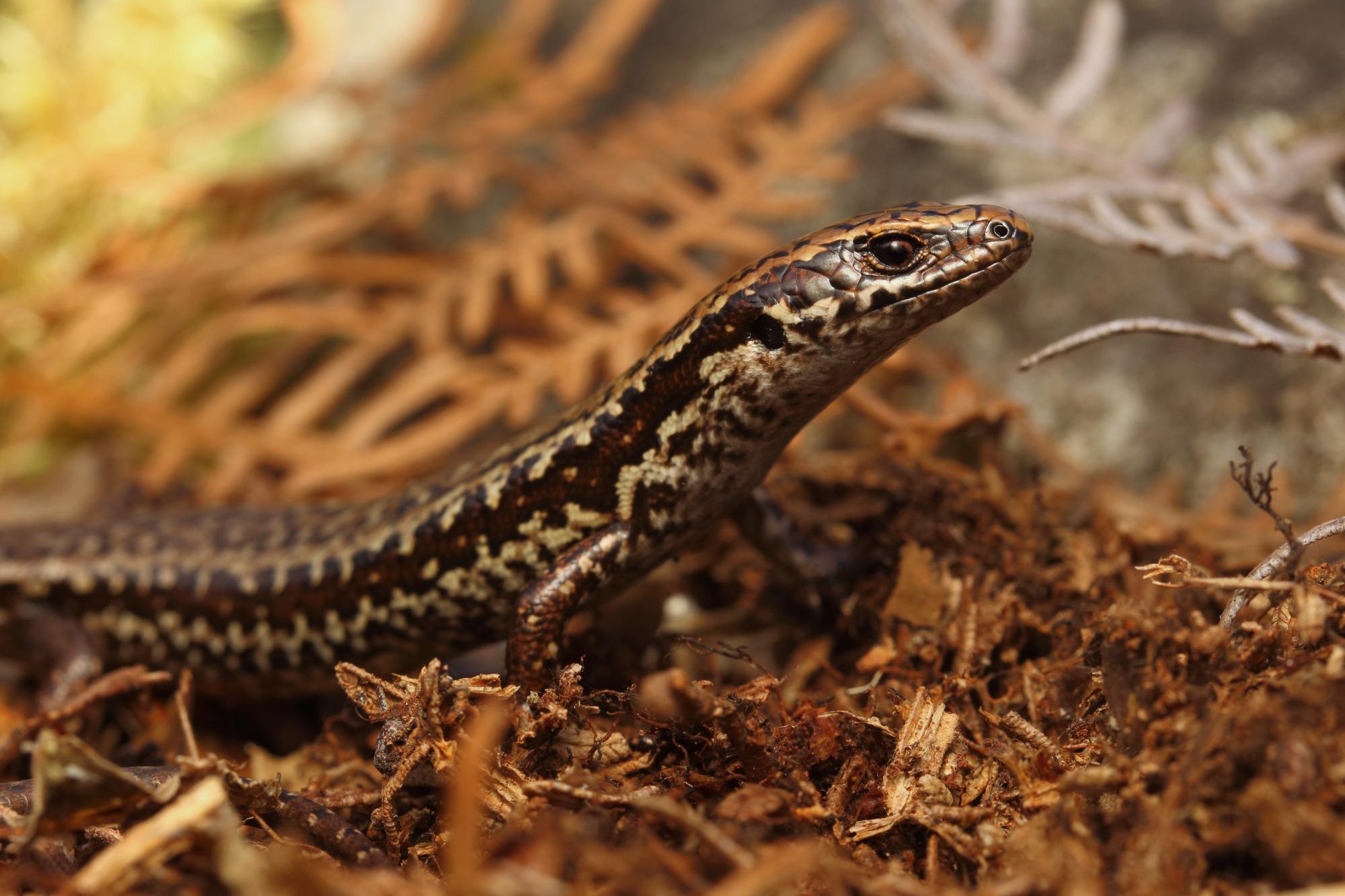
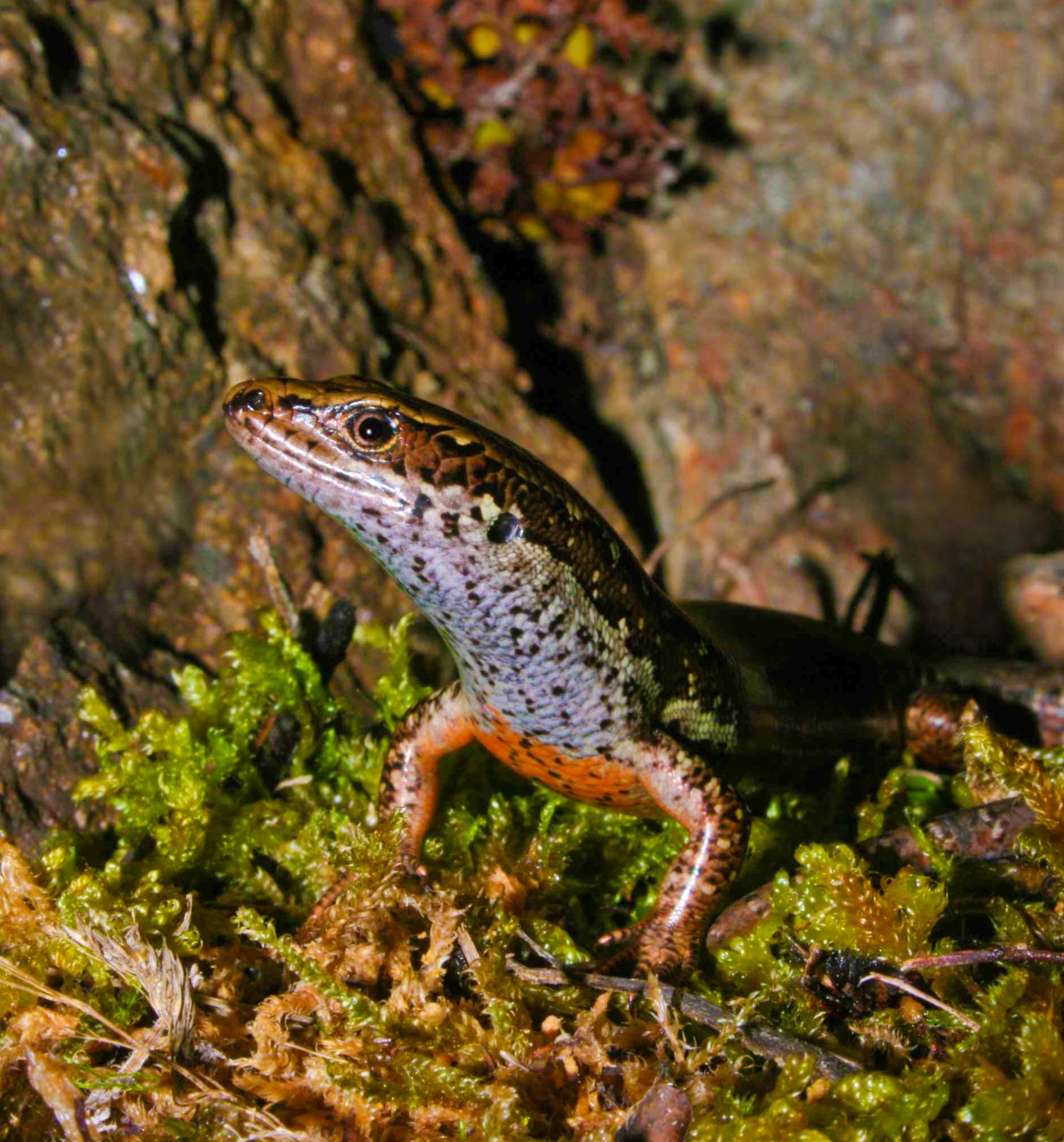
The snout is short and rounded at the tip. Dorsum (back) is various shades of brown with lighter and darker flecking. Flanks with broad dark-brown lateral stripe which is heavily crenulated at the edges and may be bordered above and below with light-brown / cream coloured dorso-lateral and mid-lateral stripes. Ventral (lower) surfaces may be bright yellow or salmon-coloured and are heavily flecked with black, the ventral colouration may be sex specific with males having an orange/red ventral surface and females having a yellow/orange ventral surface (Nick Harker, pers. obs.). Tail length (VTL) is longer than body length (SVL).
Life expectancy
Unknown, but related species are known to live for several decades (Dennis Keall, pers. comm. 2026).
Distribution
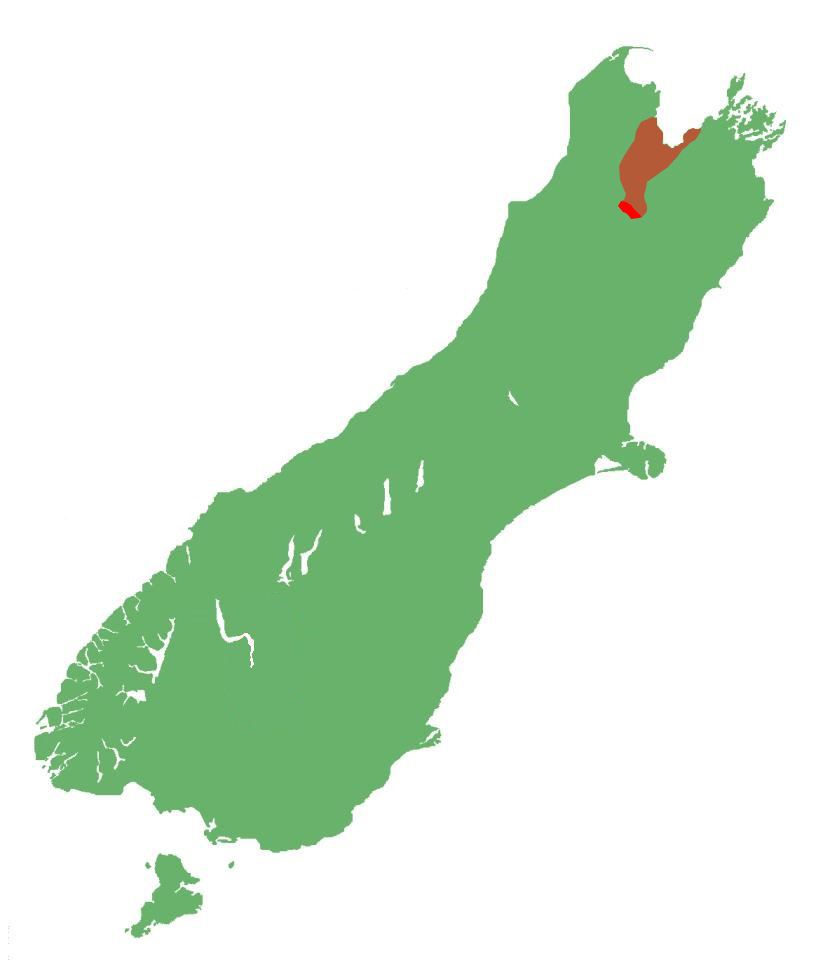
In recent decades St Arnaud speckled skinks have only been known from a few sites near St Arnaud township.
Their former distribution is not well understood. However, historic specimens suggest the species may have existed at Golden Downs nearby, and potentially occurred in lowland areas through the northern Tasman district.
Ecology and habitat
Little is known about the ecology of St Arnaud speckled skinks, although several studies were conducted at a significant population on private land during the 1990's (Duncan, 2000; Dumont, 2015).
Similar to related species, St Arnaud speckled skinks are diurnal and heliothermic. They are relatively wary compared to other species of skinks which occur sympatrically such as northern spotted skinks (Oligosoma kokowai) and northern grass skinks (Oligosoma polychroma), and retreat quickly when approached. The species appears to prefer areas with a combination of rocky and vegetative cover, although it is likely that they occurred in other habitat historically, and their current habitat use could provide better protection from introduced predators (e.g. mice, rats, mustlids, cats and hedgehogs).
Social structure
Not much is known about the social structure of St Arnaud speckled skinks. However, at one farm site they formerly occurred at high density and multiple individuals were regularly caught together.
Breeding biology
Little is known of the breeding biology of wild St Arnaud speckled skinks. In related species, mating occurs from late September to November, gestation is 12–14 weeks, and females give birth to litters of three to four juveniles from January to March. Gravid (pregnant) female St Arnaud speckled skinks have been found in November.
Diet
In common with other New Zealand skinks (Oligosoma spp.), St Arnaud speckled skinks are omnivorous. They likely consume a wide range of invertebrates such as insects and spiders, as well as the berries / fruits of native plants.
On Takapourewa / Stephen's Island a related species (Oligosoma newmani) has also been reported consuming other lizards and cannibalising smaller speckled skinks.
Disease
In related species, a variety of ectoparasites and endoparasites have been recorded, including the acari mite Neotrombicula sphenodonti; nematodes Capillaria sp., Hedruris minuta, Parathelandros sp. and Skrjabinodon trimorphi; the trematode Dolichosaccus leiolopismae (Allison & Blair, 1987); and the protozoan Haemogregarina sp.
Conservation strategy
During a long-term study by Manaaki Whenua / Landcare Research, several St Arnaud skinks were translocated to an unoccupied site near St Arnaud in the 1990's (Bruce Thomas, pers. comm., 2025). However, it is not known if these individuals persisted or established a new population.
During the early 2000's a severe decline was documented in populations of speckled skinks near St Arnaud (Dumont, 2015), and by the 2010's these were considered locally endangered. However, at this time the speckled skinks in St Arnaud were regarded as a single population of a widespread and highly variable species (the 'speckled skink' Oligosoma infrapunctatum) which had large / secure populations elsewhere. Consequently, they were not considered as a high priority for conservation work.
Recent genomic work (in 2025) confirmed that St Arnaud speckled skinks were a unique species (Ludovic Dutoit, unpublished data). By this time, the species had not been seen for 13 years - despite ongoing population monitoring at one of the known sites - and there were concerns they may have gone extinct.
In November 2025 a DOC survey utilising internal and external experts managed to locate three individuals (a male and two females), confirming the species' persistence.
These three individuals were brought into temporary captivity to safeguard them from a predicted beech mast (which would increase the number of predators in the area). The intention is that these animals (and any progeny) will be released into a pest-free location nearby in future.
Interesting notes
The species was formerly abundant at some sites near St Arnaud, but underwent severe population declines in the early 2000's - likely related to habitat degradation and introduced predators.
St Arnaud speckled skinks were only recognised as a distinct species in 2025. At this time the species had not been seen in 13 years, despite ongoing monitoring at one of the known sites.
In November 2025, a DOC team managed to locate three individuals (a male and two females) which were brought into captivity to safeguard them from a predicted beech mast.
References
Hitchmough, R.A., Barr, B., Lettink, M., Monks, J., Reardon, J., Tocher, M., van Winkel, D., Rolfe, J. (2016). Conservation status of New Zealand reptiles, 2015; New Zealand threat classification series 17. Wellington: New Zealand Department of Conservation.
Jewell, T. (2011). A photographic guide to reptiles and amphibians of New Zealand. Auckland: New Holland Publishing.
Robb, J. (1986). New Zealand Amphibians & Reptiles (Revised). Auckland: Collins, 128 pp.
Sharell, R. (1966) The tuatara, lizards and frogs of New Zealand. Collins, London, 94 pp.
van Winkel, D., Baling, M. & Hitchmough, R. (2018). Reptiles and Amphibians of New Zealand: A field guide. Auckland: Auckland University Press, 376 pp.